The Age of Commodity Volatility in 2026
Power, geopolitics, and weather shake prices
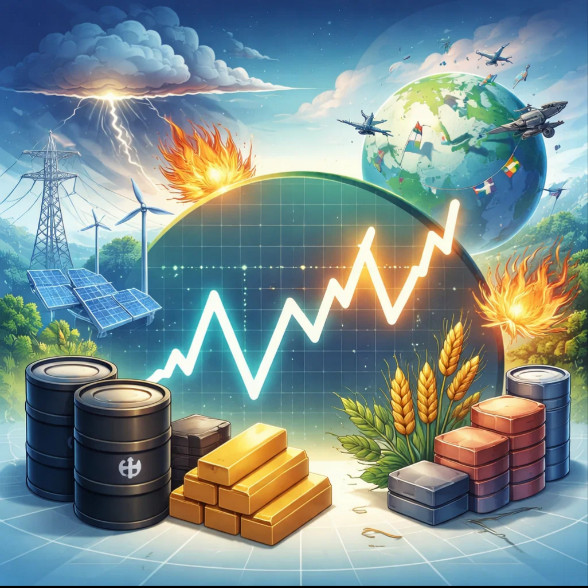
Commodity prices always rise and fall, but in some years the reasons for the swings change. 2026 is likely to be a phase that is hard to explain with supply and demand numbers alone. The surge in electricity demand driven by the energy transition, the investment race in AI data centers and power grids, tariffs and sanctions among major countries, and maritime shipping risks are all overlapping at once. If extreme weather then disrupts agricultural supply, markets will react sharply even to small headlines. In the end, the commodities most likely to show large swings in 2026 are not simply those that are scarce, but those simultaneously affected by policy, bottlenecks, and climate. So the key to reading 2026 is less about guessing what will go up, and more about identifying where volatility will explode first. Direction is hard to predict, but the structure of turbulence can be seen in advance.
A New Engine of Volatility
In the past, the business cycle tended to pull commodity prices along. When manufacturing was strong, metals rose; when transportation increased, energy rose; when consumption slowed, everything generally fell. Of course, the economy will still matter in 2026. But a faster engine has been added on top. Policy can reroute flows in a single day, regulation can narrow a corridor with a single sentence, and climate can overturn an entire season’s harvest. And in an era of complex supply chains, even if production is sufficient, prices jump when delivery fails. At that point, markets react more to rising uncertainty than to physical scarcity. The larger the uncertainty, the thinner the trading; the thinner the trading, the rougher the price action. That structure becomes the basic backdrop for volatility in 2026.
Once that backdrop is clear, commodities can be tied into one connected story rather than viewed one by one. First, energy is the domain where events and routes create sudden price jumps. Second, electrification metals sit on a long demand runway while investment speed and supply constraints create waves. Third, battery metals are shaken quickly by technology, inventories, and contracts. Fourth, strategic minerals and agricultural commodities are highly sensitive to external forces, politics and climate, so small changes can become big shocks. Finally, logistics amplifies all of these moves, and manufacturing countries like Korea feel the impact first as costs.
Energy Shockwave
In energy markets, spikes matter more than averages. Oil is a huge market, so in ordinary times it can look relatively stable. But periods that look stable are also periods in which the next event is being set up. Oil volatility in 2026 may show up more through route variables such as shipping, sanctions, and conflict than through simple narratives like oversupply or production cuts. When signals from key producers diverge, the market first reduces positions and pushes prices down, then, as risk rises, buys back aggressively and creates sharp rallies. In that process, prices move more on shifts in sentiment than on changes in physical supply. Oil is a market that dislikes risk. When risk increases, trading thins out, and in a thinner market even small news can produce big moves.
Natural gas and LNG can be sharper still, even though they are also energy. If oil is often discussed as a global price, gas is discussed as a regional price. For gas, delivery matters more than production. If any link in the chain, liquefaction facilities, import terminals, ships, ports, wobbles, regional spot prices can jump in an instant. In 2026, as data center power demand becomes clearer, gas may move beyond the image of a winter heating fuel and settle in as a year round base cost for electricity. In regions where power demand is tight, gas prices amplify the volatility of electricity bills. That is why the key points for gas markets are not only production volumes, but also facility utilization and maintenance schedules, port and vessel flows, and long term contract restructuring. The smoother the supply chain, the more gradual prices are; the moment friction appears anywhere, prices can explode.
Uranium creates yet another stream within energy. As policy signals such as new nuclear builds and life extensions continue, uranium gains a long demand narrative. But uranium is a thinner market, and because midstream steps matter, it can be more sensitive to policy and bottlenecks. If bottlenecks appear in steps like conversion and enrichment, prices reflect process risk more than supply and demand. As financialization increases, volatility grows. Even if physical demand rises slowly, prices can run ahead when capital crowds in one direction, and reversals can be swift when policy wavers. Ultimately, one sentence runs through energy markets in 2026. Wherever the average sits, events and routes create spikes.
Electrification Metals War
If energy is a story of spikes, electrification metals are a story of speed. The more electric systems expand, across grid upgrades, renewable installations, EVs and charging, and the wiring and cooling of data centers, the more broadly metal demand is laid down. That demand is hard to switch off completely even if the economy slows. Electrification metals therefore look structurally supported, yet prices can swing more often. The reason is that as demand grows, expectations run ahead, and the bigger the expectations, the bigger the disappointment. When investment plans are announced, markets price in demand first. But when higher rates or fiscal constraints begin to delay projects, prices reverse by the same amount that speed slows. Volatility in 2026 can grow out of these shifts in pace.
Copper is the flagship metal of electrification. Like the bloodstream of the power grid, it goes into almost every electrical system. The problem is that supply cannot expand instantly. New mine development takes a long time, and variables such as environmental regulation and community conflict are always present. With those constraints, when demand expectations rise, prices can surge easily. But if financial conditions deteriorate and grid investment shows signs of slowing, prices cool immediately. Copper often becomes more sensitive to variables like investment speed, permitting delays, inventory changes, and supply chain bottlenecks than to current consumption itself. The way to read copper in 2026 is not simply to ask whether demand will grow, but to ask how quickly that demand becomes real.
Aluminum swings in a different way. Aluminum has broad demand because it is light and recyclable, used across EVs, aviation, packaging, and construction. Yet aluminum is power intensive, so electricity prices and power policy become the core variables in 2026. If electricity prices rise, smelters cut output or reduce utilization, and that signal moves supply and prices. When carbon regulation tightens, a cost shock can quickly become a supply shock. Aluminum prices are not only about metal supply and demand, but about electricity costs embedded in the metal. When power costs stabilize, supply returns and prices are pressed down again. Repeating reversals like this can create volatility in 2026.
Silver adds yet another texture. Silver is both a precious metal and an industrial metal. While industrial demand from solar and electronics holds, financial variables such as interest rates and the dollar shake investment demand. A structure in which industry and finance meet on a single price accelerates moves when the market leans one way. If solar policy strengthens, industrial demand expectations can push prices up; if policy uncertainty rises, those expectations can fade quickly. The story of electrification metals in 2026 ultimately connects into one line. Even with long term demand laid down, investment speed and cost variables can make prices swing more often.
Battery Metals Roller Coaster
As electrification expands, battery metals become more important. But battery metal prices cannot be explained by a single number like EV sales. In this market, technology, inventories, and contracts set prices. When battery chemistry changes, raw material demand changes; when companies adjust inventories, short term demand can shift abruptly. As long term contracts increase, the spot market becomes thinner, and thinner markets become more sensitive. The reason battery metals may show larger swings in 2026 is that what matters is not just growth itself, but the adjustment mechanism becoming faster.
Lithium shows that most clearly. Lithium tends to fall quickly when supply rises and rise sharply when expectations build, producing a pronounced cycle. Lithium can remain a prime candidate for large swings in 2026 as well. The key is less whether demand grows, and more how inventories move. If automakers and battery makers reduce inventories, short term demand can drop and prices can slide quickly. If supply chain uncertainty increases, pre buying and inventory building can lift prices. And if technologies that reduce raw material intensity or substitute other materials are adopted faster, markets may evaluate future demand more conservatively. Lithium is one of the metals where changes in industrial decision making translate into prices the fastest.
Nickel is structurally more complex. Nickel has both a traditional axis of stainless steel demand and a newer axis of battery demand. If expansions concentrate in certain regions, the supply shock can be large and prices can drop sharply. If environmental regulation or production limits become salient, markets quickly price in supply anxiety. The more supply and processing are concentrated in particular regions and countries, the more policy risk transmits into price. So in 2026, nickel can swing widely up and down even without a clear directional trend. When expansion news and regulatory news intersect, markets assign completely different prices to the same metal.
Cobalt is volatility driven by uncertainty. As technologies that reduce cobalt usage advance, long term demand can become uncertain. The lower the conviction, the more markets overreact to small headlines. Events such as mine disruptions, ethical controversies, and export restrictions can make cobalt jump suddenly. At the same time, if recycling expands and substitution technologies spread quickly, pullbacks can appear each time prices rise. Battery metals in 2026 are a story of growth, but also a story of adjustments driven by inventories and technology. The faster those adjustments, the greater the volatility.
Dual Shocks of Politics and Climate
If energy and metals are stories of industry and investment speed, strategic minerals and agricultural commodities are stories of external forces, politics and climate. In this area, prices move not because demand is rising, but because corridors are narrowing. Strategic minerals are concentrated in specific countries, and policy tools such as export controls and licensing regimes determine the flow of material. Agricultural commodities are concentrated in specific growing regions, and extreme weather determines harvests. In both areas, small changes can easily become large waves.
Strategic minerals such as rare earths, graphite, gallium, and germanium sit at the intersection of technology and security. Even if the market is not large, volatility can be. The reasons are that price discovery is opaque, spot markets are thin, and policy signals move prices directly. Even a hint that export procedures will tighten or approvals will be delayed can lead companies to build inventories. That inventory demand pulls prices up in the short run. If policy loosens or alternative channels take hold, prices can be pressed down again. In 2026, strategic mineral volatility depends less on demand growth and more on the frequency and intensity of control signals.
Graphite is a case where the speed of supply chain restructuring itself can set prices. Graphite is a core material for battery anodes, and what matters is not only mining but also refining and processing. If refining and processing are concentrated in a single region, bottlenecks are more likely. Diversification can help stability over the medium term, but during the transition, certifications, quality requirements, and facility investments must proceed together, which can create short term bottlenecks. When bottlenecks appear, pre buying rises, and when pre buying rises, prices move faster. Strategic minerals become more volatile precisely when supply chains are being changed.
Agricultural commodities are where climate presses the button. Cocoa and coffee are concentrated in specific regions and are sensitive to pests and shifts in rainfall patterns. When headlines say yields are worsening, prices react immediately, and even if acreage expands, harvests take time. That time lag produces spikes, and spikes draw in capital that repeats cycles of overheating and correction. Grains add policy on top. Staples such as wheat, corn, and soy are tied to food security, so export restrictions or tariff changes can move prices. Agricultural volatility in 2026 grows when climate and policy operate at the same time. Sugar can add biofuel policy to the mix. It looks like a food input, but once policy enters, it also takes on the character of an energy commodity.
And the final channel that turns all these shocks into real costs is logistics. If route risks rise, ship insurance costs increase, and port congestion grows, commodities fail to arrive on time. At that point, prices move not as global averages but as regional premiums. Metals and energy, which require bulk transport, are especially sensitive to logistics shocks. Logistics is an amplifier of commodity prices. In 2026, the more frequently politics and climate disrupt logistics, the more often premiums can appear and then disappear again.
Korean Manufacturing Cost Alert
Korea imports large volumes of energy and raw materials and exports them as manufactured products. So commodity volatility becomes margin volatility. The items most likely to swing in 2026 are tied directly to core manufacturing costs in Korea. Electrification metals like copper and aluminum, battery metals like lithium and nickel, strategic materials like graphite and rare earths, and energy such as oil and LNG can all move costs at once. If exchange rates, interest rates, and logistics costs move together, the result is not a single commodity shock but a compound shock. Because of that compound nature, structural 대응 becomes more important than short term price prediction in 2026.
First is redesigning contracts. More important than the ability to forecast commodity prices is having contracts that can endure them. Raw material price pass through clauses should be built into sales contracts, and terms should be designed so that losses do not explode during delivery delays and price spikes. Second is diversification of procurement. Dependence on a single supplier must be reduced, and alternative supply lines must be secured. Diversification costs money, but in an era of high volatility it functions like insurance. Third is making inventory scientific. Inventories should not simply be raised or lowered; an appropriate band must be designed around demand forecasts and delivery risk. Fourth is specification flexibility. Designs that allow alternative materials, along with early certification and quality preparation, determine production continuity in volatile times. In the end, 2026 is not a question of the instinct to buy low and sell high. It is a question of systems that keep production running in a shaky environment.
In conclusion, the commodity market in 2026 connects into a single sentence. Speed is scarier than direction. In energy, events and routes create spikes; in electrification metals, investment speed and costs create waves; in battery metals, technology, inventories, and contracts create roller coasters. In strategic minerals and agricultural commodities, politics and climate press the button, and logistics amplifies all of it into regional premiums. So the contest in 2026 is decided not by prophecy but by design. The winner is not the one who predicts direction, but the one who builds a structure that endures turbulence.
2026년 원자재 변동성의 시대
- 전력과 지정학과 날씨가 가격을 흔든다
원자재 가격은 늘 오르고 내리지만 어떤 해에는 흔들림의 이유가 달라진다. 2026년은 수요와 공급의 숫자만으로 설명하기 어려운 장이 될 가능성이 크다. 에너지 전환이 만든 전기 수요의 급증, 인공지능 데이터센터와 전력망 투자 경쟁, 주요국의 관세와 제재, 해상 운송 리스크가 동시에 겹치기 때문이다. 여기에 기상이변이 농산물의 공급을 흔들면 시장은 작은 뉴스에도 크게 반응한다. 결국 2026년에 변동폭이 클 가능성이 큰 원자재는 단순히 부족한 품목이 아니라 정책과 병목과 기후가 동시에 영향을 주는 품목이다. 그래서 2026년을 읽는 핵심은 무엇이 오를지 맞히는 일보다 어디에서 변동성이 폭발하는지 먼저 파악하는 일에 가깝다. 방향은 맞히기 어려워도 흔들림의 구조는 미리 볼 수 있기 때문이다.
변동성의 새 엔진
예전에는 경기 사이클이 원자재 가격을 끌고 갔다. 제조업이 강하면 금속이 오르고, 운송이 늘면 에너지가 오르고, 소비가 둔화하면 전반이 내려가는 식이었다. 물론 2026년에도 경기는 중요하다. 다만 그 위에 더 빠른 엔진이 올라타 있다. 정책은 하루 만에 경로를 바꾸고, 규제는 한 문장으로 통로를 좁히며, 기후는 한 계절의 작황을 뒤집는다. 게다가 공급망이 복잡해진 시대에는 생산이 충분해도 도착이 실패하면 가격은 튄다. 이때 시장은 물량의 부족보다 불확실성의 증가에 더 크게 반응한다. 불확실성이 커질수록 거래는 얇아지고, 얇아질수록 가격은 더 거칠어진다. 이 구조가 2026년 변동성의 기본 배경이 된다.
이 배경을 이해하면 각 원자재를 따로따로 보는 대신 한 덩어리의 이야기로 엮을 수 있다. 첫째, 에너지는 사건과 경로가 가격을 순간적으로 점프시키는 영역이다. 둘째, 전기화 금속은 장기 수요의 깔림 위에서 투자 속도와 공급 제약이 파동을 만든다. 셋째, 배터리 금속은 기술과 재고와 계약이 가격을 빠르게 흔든다. 넷째, 전략광물과 농산물은 정치와 기후라는 외생 변수에 민감해 작은 변화가 큰 충격이 된다. 마지막으로 물류는 이 모든 변동을 증폭시키는 증폭기이며, 한국 같은 제조업 국가는 그 충격을 원가로 가장 먼저 체감한다.
에너지 충격파
에너지 시장은 평균보다 스파이크가 더 무서운 시장이다. 원유는 거대한 시장이어서 일상적으로는 비교적 안정적으로 보일 수 있다. 그러나 안정처럼 보이는 기간은 사건을 준비하는 기간이기도 하다. 2026년 원유의 변동성은 공급 과잉이나 감산이라는 단어보다 운송과 제재와 분쟁 같은 경로 변수에서 더 크게 나타날 수 있다. 특정 산유국의 신호가 엇갈리면 시장은 먼저 포지션을 줄이며 가격을 눌렀다가, 리스크가 커지는 순간 다시 급하게 되사며 급등을 만든다. 이 과정에서 가격은 실물 공급의 변화보다 심리의 변화에 더 크게 움직인다. 원유는 위험을 싫어하는 시장이다. 위험이 커지면 거래가 얇아지고, 얇아진 시장에서는 작은 뉴스도 큰 움직임이 된다.
천연가스와 액화천연가스는 같은 에너지라도 더 날카롭다. 원유가 세계 가격으로 이야기되는 경우가 많다면 가스는 지역 가격으로 이야기된다. 가스는 생산보다 도착이 핵심이다. 액화 설비, 수입 터미널, 선박, 항만이라는 연결 고리 중 하나만 흔들려도 특정 지역의 스팟 가격은 순식간에 뛴다. 2026년에는 데이터센터 전력 수요가 더 뚜렷해질수록 가스는 겨울철 난방용 연료라는 이미지에서 벗어나 연중 전력의 기반 원가로 자리 잡을 가능성이 커진다. 전력 수요가 빡빡한 지역에서는 가스 가격이 전기요금의 변동성을 증폭시키는 역할을 한다. 그래서 가스 시장의 관전 포인트는 생산량 그 자체보다 설비 가동률과 유지 보수 일정, 항만과 선박의 흐름, 장기계약 구조 재편 같은 인프라 변수에 있다. 공급망이 매끄럽게 이어질수록 가격은 완만해지고, 어느 한 곳에서 마찰이 생길수록 가격은 폭발한다.
우라늄은 에너지 부문에서 또 다른 흐름을 만든다. 원전 신규 건설과 수명 연장 같은 정책 신호가 이어지면 우라늄은 장기 수요 서사를 확보한다. 하지만 우라늄은 시장이 얇고 중간 공정이 중요해 정책과 병목에 더 민감하다. 정제 전환 농축 같은 단계에서 병목이 생기면 가격은 수급보다 공정 리스크를 반영한다. 여기에 금융화가 더해지면 변동성은 커진다. 실물 수요가 서서히 늘어도 자금이 한 방향으로 몰리면 가격은 앞서 달리고, 정책이 흔들리면 되돌림도 빠르다. 결국 2026년 에너지 시장을 관통하는 문장은 하나로 정리된다. 평균이 어디에 있든 사건과 경로가 스파이크를 만든다.
전기화 금속 전쟁
에너지가 스파이크의 이야기라면, 전기화 금속은 속도의 이야기다. 전력망 확충, 재생에너지 설비, 전기차와 충전 인프라, 데이터센터의 배선과 냉각 시스템까지 전기 시스템이 커질수록 금속 수요는 넓게 깔린다. 이 수요는 경기가 둔화해도 완전히 꺼지기 어렵다. 그래서 전기화 금속은 구조적으로는 강해 보이지만, 가격은 오히려 자주 흔들릴 수 있다. 이유는 수요가 커질수록 기대가 앞서가고, 기대가 앞서갈수록 실망도 커지기 때문이다. 투자 계획이 발표되면 시장은 먼저 수요를 선반영한다. 그러나 금리 부담이 커지거나 재정 여건이 흔들리면 프로젝트는 늦춰지고, 늦춰진 속도만큼 가격은 되돌아온다. 2026년의 변동성은 이 속도 변화에서 커질 수 있다.
구리는 전기화의 대표 금속이다. 전력망의 혈관처럼 거의 모든 전기 시스템에 들어간다. 문제는 공급이 즉시 늘기 어렵다는 점이다. 신규 광산 개발에는 긴 시간이 필요하고, 환경 규제와 지역 사회 갈등이라는 변수가 상시로 존재한다. 이런 제약이 있는 상태에서 수요 기대가 커지면 가격은 쉽게 치솟는다. 반대로 금융 여건이 나빠져 전력망 투자가 지연될 조짐이 보이면 가격은 곧바로 식는다. 구리는 실제 소비량보다 투자 속도와 인허가 지연, 재고 변화, 공급망 병목 같은 변수에 더 민감한 구간이 자주 생긴다. 2026년 구리를 읽는 방법은 단순히 수요가 늘까를 묻는 것이 아니라 수요가 얼마나 빨리 현실이 되는가를 묻는 것이다.
알루미늄은 구리와 다른 방식으로 흔들린다. 알루미늄은 가볍고 재활용이 가능해 전기차 항공 포장 건설 같은 산업에서 수요 기반이 넓다. 그런데 알루미늄은 전력 집약 산업이라는 성격 때문에 전기요금과 전력 정책이 가격의 핵심 변수가 된다. 전기료가 오르면 제련소는 감산하거나 가동을 줄이고, 그 신호가 공급을 흔들어 가격을 움직인다. 탄소 규제가 강화되는 국면에서는 비용 충격이 공급 충격으로 빠르게 전환된다. 알루미늄 가격은 금속의 수급만이 아니라 전기요금이 녹아든 가격이다. 전력 비용이 안정되면 공급이 회복되고, 가격은 다시 눌린다. 이런 되돌림의 반복이 2026년 변동성을 만든다.
여기에 은은 또 다른 결을 더한다. 은은 귀금속이면서 산업용 금속이다. 태양광과 전자부품의 산업 수요가 유지되는 동안 금리와 달러 같은 금융 변수는 투자 수요를 흔든다. 산업과 금융이 하나의 가격 위에서 만나는 구조는 방향이 쏠릴 때 속도를 키운다. 태양광 정책이 강화되면 산업 수요 기대가 가격을 밀어 올릴 수 있고, 정책 불확실성이 커지면 기대는 빠르게 꺼질 수 있다. 2026년 전기화 금속의 이야기는 결국 하나로 이어진다. 장기 수요가 깔려 있어도 투자 속도와 비용 변수 때문에 가격은 오히려 더 자주 흔들린다.
배터리 금속 롤러코스터
전기화가 확대될수록 배터리 금속도 중요해진다. 하지만 배터리 금속의 가격은 전기차 판매량 같은 한 가지 숫자로는 설명되지 않는다. 이 시장은 기술과 재고와 계약이 가격을 만든다. 배터리 화학 조성이 바뀌면 원재료 수요가 달라지고, 기업이 재고를 조정하면 단기 수요가 급격히 바뀐다. 장기계약이 늘어나면 스팟 시장은 더 얇아지고, 얇은 시장은 더 민감해진다. 2026년에 배터리 금속의 변동폭이 커질 수 있는 이유는 성장 그 자체보다 조정의 방식이 더 빨라졌기 때문이다.
리튬은 그 특징을 가장 선명하게 보여준다. 리튬은 공급이 늘면 빠르게 가격이 내려가고, 기대가 붙으면 급하게 오르는 사이클을 보이기 쉽다. 2026년에도 리튬은 변동폭이 큰 후보로 남을 수 있다. 핵심은 수요가 늘까보다 재고가 어떻게 움직일까다. 완성차와 배터리 업체가 재고를 줄이면 단기간 수요가 꺾이며 가격이 빠르게 밀릴 수 있다. 반대로 공급망 불확실성이 커지면 선매수와 재고 확대로 가격이 뛰기도 한다. 또한 원재료 사용량을 줄이거나 다른 소재로 대체하는 기술의 채택 속도가 빨라지면, 시장은 수요의 미래를 더 보수적으로 평가할 수 있다. 리튬은 산업 의사결정이 가장 빠르게 가격으로 연결되는 금속이다.
니켈은 구조가 더 복잡하다. 니켈은 스테인리스 수요라는 전통 축과 배터리 수요라는 신흥 축이 동시에 있다. 특정 지역에서 증설이 집중되면 공급 충격이 커지고, 가격은 급락할 수 있다. 반대로 환경 규제나 생산 제한 이슈가 부각되면 시장은 공급 불안을 빠르게 가격에 반영한다. 니켈은 공급이 집중된 지역과 공정이 특정 국가에 편중될수록 정책 리스크가 가격으로 전이된다. 그래서 2026년 니켈은 방향성이 뚜렷하지 않아도 위아래로 크게 흔들릴 수 있다. 증설과 규제가 교차할 때 시장은 같은 금속에 전혀 다른 가격을 매긴다.
코발트는 불확실성이 변동성을 만든다. 코발트는 사용량 절감 기술이 진전되면서 장기 수요가 불확실해질 수 있다. 확신이 낮을수록 시장은 작은 뉴스에 과잉 반응한다. 특정 광산의 생산 차질, 윤리 이슈, 수출 규제 같은 이벤트가 나오면 코발트는 순간적으로 튈 수 있다. 동시에 재활용 확대와 대체 기술이 빠르게 확산되면 가격이 오를 때마다 되돌림이 나타난다. 2026년 배터리 금속은 성장의 이야기이면서 동시에 재고와 기술이 만드는 조정의 이야기다. 이 조정이 빠를수록 변동성은 커진다.
정치와 기후의 이중 충격
에너지와 금속이 산업과 투자 속도의 이야기라면, 전략광물과 농산물은 정치와 기후라는 외생 변수의 이야기다. 이 영역에서 가격은 수요가 늘어서가 아니라 통로가 좁아져서 움직인다. 전략광물은 공급이 특정 국가에 집중되어 있고 수출 통제나 허가 제도가 물량의 흐름을 결정한다. 농산물은 생산 지역이 제한되어 있고 기상이변이 작황을 좌우한다. 두 영역 모두 작은 변화가 큰 파동으로 번지기 쉬운 구조다.
희토류와 흑연, 갈륨, 게르마늄 같은 전략광물은 기술 산업과 안보 산업의 교차점에 있다. 시장 규모가 크지 않아도 변동성이 크게 나타날 수 있다. 이유는 거래 정보가 불투명하고 스팟 시장이 얇으며 정책 신호가 가격을 직접 움직이기 때문이다. 수출 절차가 까다로워지거나 허가가 지연될 것이라는 신호만으로도 기업들은 재고를 늘리려 한다. 그 재고 수요가 단기 가격을 끌어올린다. 반대로 정책이 완화되거나 우회 공급이 자리 잡으면 가격은 다시 눌린다. 2026년 전략광물의 변동성은 수요 증가보다 통제 신호의 빈도와 강도에 달려 있다.
흑연은 특히 공급망 재편의 속도가 가격을 만들 수 있다. 흑연은 배터리 음극재의 핵심인데, 채굴만이 아니라 정제와 가공이 중요하다. 정제와 가공이 특정 지역에 편중되어 있으면 병목이 생기기 쉽다. 다변화가 진행되면 중장기적으로 안정에 도움이 될 수 있지만, 전환 과정에서는 인증과 품질과 설비 투자가 동시에 필요해 단기 병목이 발생할 수 있다. 병목이 생기면 선매수가 늘고, 선매수가 늘면 가격은 더 빠르게 움직인다. 전략광물은 공급망을 바꾸는 순간 흔들림이 커진다.
농산물은 기후가 버튼이다. 코코아와 커피는 생산 지역이 제한되어 있고 병해충과 강수 패턴 변화에 민감하다. 작황이 나빠졌다는 소식이 나오면 가격은 즉시 반응하고, 재배 면적을 늘려도 수확까지 시간이 걸린다. 이 시간차가 급등을 만들고, 급등은 다시 자금 유입으로 과열과 조정을 반복하게 한다. 곡물은 여기에 정책이 겹친다. 밀 옥수수 대두 같은 곡물은 식량 안보와 연결되어 수출 제한이나 관세 조정이 가격을 흔들 수 있다. 2026년 농산물의 변동성은 기후와 정책이 동시에 작동할 때 커진다. 설탕은 여기에 바이오연료 정책까지 얹힐 수 있다. 식품 원료처럼 보이지만 정책이 붙는 순간 에너지 원자재의 성격을 함께 띤다.
그리고 이 모든 충격을 실제 비용으로 바꾸는 마지막 통로가 물류다. 항로 리스크가 커지거나 선박 보험료가 오르고 항만 적체가 늘어나면 원자재는 제때 도착하지 못한다. 그 순간 가격은 세계 평균이 아니라 지역 프리미엄으로 움직인다. 특히 대량 운송이 필요한 금속과 에너지는 물류 충격에 민감하다. 물류는 원자재 가격의 증폭기다. 2026년에는 정치와 기후가 물류를 흔드는 빈도가 늘어날수록, 프리미엄이 붙었다 떨어지는 반복도 더 잦아질 수 있다.
한국 제조업 원가 경보
한국은 에너지와 원자재를 대규모로 수입하고 이를 가공해 수출하는 구조를 가진다. 그래서 원자재 변동성은 곧 마진 변동성이다. 2026년에 흔들릴 가능성이 큰 품목들은 한국 제조업의 핵심 원가와 연결되어 있다. 구리와 알루미늄 같은 전기화 금속, 리튬과 니켈 같은 배터리 금속, 흑연과 희토류 같은 전략 소재, 원유와 액화천연가스 같은 에너지가 동시에 원가를 흔든다. 여기에 환율과 금리와 물류비가 함께 움직이면 단일 품목의 충격이 아니라 복합 충격이 된다. 이 복합성 때문에 2026년에는 단기 가격 예측보다 구조적 대응이 더 중요해진다.
첫째는 계약의 재설계다. 원자재 가격을 맞히는 능력보다 가격을 견디는 계약이 필요하다. 원재료 가격 연동 조항을 판매 계약에 반영하고, 납기 지연과 가격 급등 구간에서 손실이 폭발하지 않도록 조건을 설계해야 한다. 둘째는 조달의 다변화다. 단일 조달처 의존을 줄이고 대체 공급선을 확보해야 한다. 다변화는 비용이 들지만 변동성이 큰 시대에는 보험에 가깝다. 셋째는 재고의 과학화다. 재고를 무조건 늘리거나 줄이는 방식이 아니라, 수요 예측과 납기 리스크에 맞춘 적정 범위를 설계해야 한다. 넷째는 사양의 유연성이다. 대체 소재를 사용할 수 있는 설계와 인증, 품질 기준의 선제적 확보가 변동성 시대의 생산 연속성을 좌우한다. 결국 2026년은 싸게 사서 비싸게 파는 감각의 문제가 아니라 흔들리는 환경에서 생산을 멈추지 않는 시스템의 문제다.
결과적으로, 2026년 원자재 시장은 하나의 문장으로 이어진다. 가격은 방향보다 속도가 더 무섭다. 에너지는 사건과 경로가 스파이크를 만들고, 전기화 금속은 투자 속도와 비용이 파동을 만들며, 배터리 금속은 기술과 재고와 계약이 롤러코스터를 만든다. 전략광물과 농산물은 정치와 기후가 버튼을 누르고, 물류는 그 모든 변동을 지역 프리미엄으로 증폭시킨다. 그래서 2026년의 승부는 예언이 아니라 설계에서 갈린다. 방향을 맞히는 사람보다 흔들림을 견디는 구조를 만든 사람이 이긴다.